

Operational Carbon in Buildings
Buildings are responsible for approximately 40% of global greenhouse gas (GHG) emissions, making them a critical focus for achieving emission reduction targets. People spend approximately 90% of their time in various building environments. Building-related carbons are therefore more actionable through design, technology, and behavior changes.
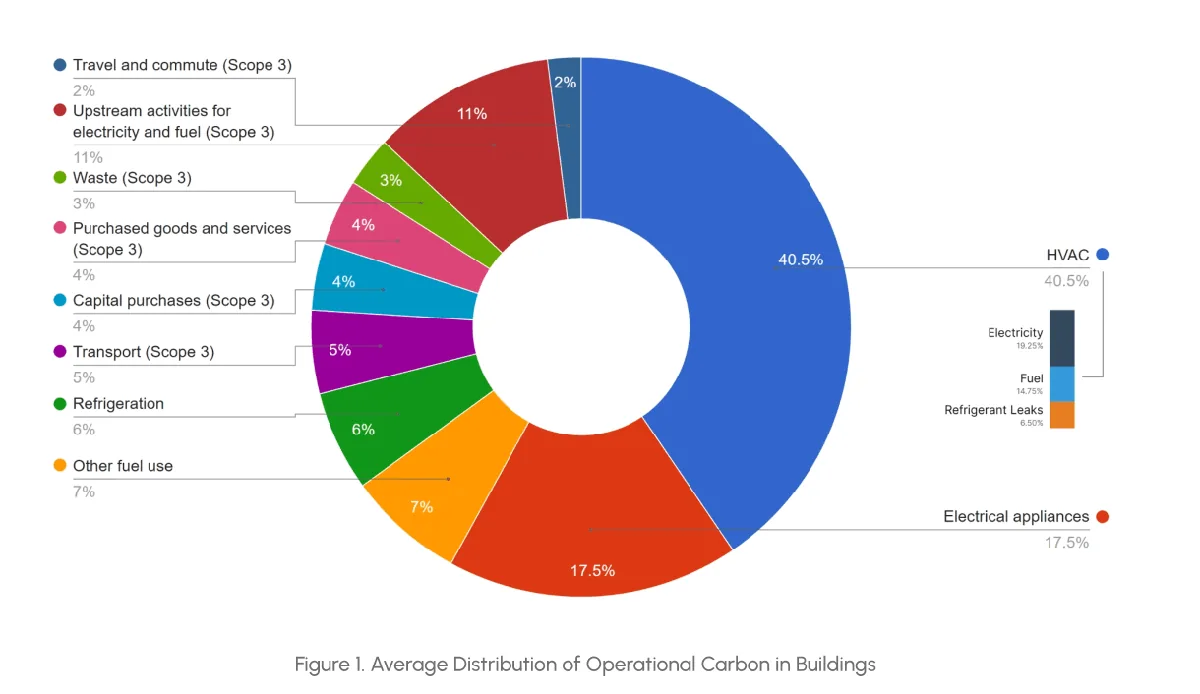
Distribution of Operational Carbon in Buildings
Operational carbon is GHG emissions generated through the operational stage of the buildings. It doesn’t include embodied carbon, which comes from the building materials used and the process to construct buildings. HVAC systems are frequently the biggest contributor to buildings’ carbon footprints.
HVAC systems include a range of different emission activities. Buildings in different uses (e.g., research vs. retailing) carry on different operational activities and have different emission profiles.
Understanding the carbon footprint distribution of your own buildings is the first step towards emission reduction. To do that you need emission tracking tools with sufficient specificity.